Balkinization
an unanticipated consequence of
Jack M. Balkin
Jack Balkin:
jackbalkin at yahoo.com
Bruce Ackerman
bruce.ackerman at yale.edu
Ian Ayres
ian.ayres at yale.edu
Corey Brettschneider
corey_brettschneider at brown.edu
Mary Dudziak
mary.l.dudziak at emory.edu
Joey Fishkin
joey.fishkin at gmail.com
Heather Gerken heather.gerken at yale.edu
Abbe Gluck abbe.gluck at yale.edu
Mark Graber
mgraber at law.umaryland.edu
Stephen Griffin
sgriffin at tulane.edu
Jonathan Hafetz
jonathan.hafetz at shu.edu
Jeremy Kessler
jkessler at law.columbia.edu
Andrew Koppelman
akoppelman at law.northwestern.edu
Marty Lederman
msl46 at law.georgetown.edu
Sanford Levinson
slevinson at law.utexas.edu
David Luban
david.luban at gmail.com
Gerard Magliocca
gmaglioc at iupui.edu
Jason Mazzone
mazzonej at illinois.edu
Linda McClain
lmcclain at bu.edu
John Mikhail
mikhail at law.georgetown.edu
Frank Pasquale
pasquale.frank at gmail.com
Nate Persily
npersily at gmail.com
Michael Stokes Paulsen
michaelstokespaulsen at gmail.com
Deborah Pearlstein
dpearlst at yu.edu
Rick Pildes
rick.pildes at nyu.edu
David Pozen
dpozen at law.columbia.edu
Richard Primus
raprimus at umich.edu
K. Sabeel Rahmansabeel.rahman at brooklaw.edu
Alice Ristroph
alice.ristroph at shu.edu
Neil Siegel
siegel at law.duke.edu
David Super
david.super at law.georgetown.edu
Brian Tamanaha
btamanaha at wulaw.wustl.edu
Nelson Tebbe
nelson.tebbe at brooklaw.edu
Mark Tushnet
mtushnet at law.harvard.edu
Adam Winkler
winkler at ucla.edu
Compendium of posts on Hobby Lobby and related cases
The Anti-Torture Memos: Balkinization Posts on Torture, Interrogation, Detention, War Powers, and OLC
The Anti-Torture Memos (arranged by topic)
Recent Posts
Why Can’t House Republicans Have Nice Things?
Norm Breaking at Columbia
Abrams Institute Conversations: Will the Supreme Court Let States Take Control of the Internet?
The Supreme Court's First Chat-GPT Opinion
How the Supreme Court uses ‘tradition’ to take away the rights of Americans
Mark Milley and the Constitution
The Supreme Court’s Gay Rights-Religious Liberty Contortions
Send in the Clowns
Balkinization Symposium on Richard L. Hasen, A Real Right to Vote: How a Constitutional Amendment Can Safeguard American Democracy-- Collected Posts
Who will own DJT?
Comstockery in the Court and on the Campaign
A Surreal Right to Vote: Responding to the Balkinization Symposium
Dare to Dream
Some skepticism about (and some promise for) a constitutional right to vote
Agency Problems’ Impact on Budgetary Outcomes
Do We Need Audacity Instead of Measured Prudence? On the Pathos of Richard Hasen's Call For “A Real Right To Vote”
Why We Won Trump v. Anderson
A [More] Real Right to Vote?
Rabbi Akiva and the Crowns: A Parable of Constitutional Fidelity
That Little Omission in the Constitution
Academic Freedom of the Press: Is it Too Late for the New Fourth Estate?
Going Big on Election Reform: A Political Scientist’s Take on Rick Hasen’s Proposed Constitutional Amendment
Give us (a lasting consensus on really protecting) the Right to Vote!
Expanding Our Constitutional Imagination
The Myth of the Irresolvable Conflict
Balkinization Symposium on Richard L. Hasen, A Real Right to Vote: How a Constitutional Amendment Can Safeguard American Democracy
Trump and the American Problem of the Commons.
What's dividing the Justices (and other initial reactions to the Court's decision in Trump v. Anderson)
Is Trump's Innocence Irrelevant?
Two Other Quick Takes on the Opinion
The Court Wasn't Clear Enough
Ida B. Wells: A Plea for Law and Society Canonization
Anticipating a New Senate Republican Leadership
![[Powered by Blogger]](https://lh3.googleusercontent.com/blogger_img_proxy/AEn0k_siLvraA6JgMDjwADKGE9uwptGCC_KdJUYiDu0S8k6GGbJxOVjSrSkzfgoGfZ5aZb3QDaUYT8Qla4JaJjHarLPW8FmZjaJzDEMmHz12zaCb=s0-d)
Just A Few Blogs
ACS Blog
Alas, a Blog
Althouse
Arts and Letters Daily
Atrios (Eschaton)
Bill of Health
Buzzflash.com
Buzz Machine
Cato at Liberty
Juan Cole (Informed Comment)
Concurring Opinions
The Constitution in 2020
Corrente
Crooked Timber
Daily Howler
Daily Kos
Dana Boyd
Brad DeLong
Digby (Hullabaloo)
Discriminations
Daniel Drezner
Kevin Drum (Mother Jones)
Electrolite
En Banc
Eunomia (Daniel Larison)
Fafblog
Michael Froomkin (Discourse.net)
GovLab (Beth Noveck)
Rick Hasen (Election Law)
History News Network
How Appealing
Ignatz (Sam Heldman)
The Importance of (Ernie Miller)
Infolaw
Instapundit
International Economic Law and Policy Blog
IntLawGrrls
Jacob Levy
Jesus' General
Jurisdynamics
The Kitchen Cabinet
Mark Kleiman
Law Blog Central
Larry Lessig
Lawyers, Guns and Money
Liberal Oasis
Brian Leiter's Law School Reports
The Leiter Reports
Marginal Revolution
Megan McArdle
Memeorandum
Metafilter
Mirror of Justice
The New Republic
Newseum
No More Mister Nice Blog
Brendan Nyhan
Opinio Juris
Orcinus
The Originalism Blog
Pandagon
Passport (Foreign Policy)
Overcoming Bias
Political Animal (Washington Monthly)
Political Theory Daily Review
Political Wire (Taegan Goddard)
The Poor Man
Virginia Postrel
Prawfsblawg
Public Reason
Jonathan Rauch
Raw Story
Redstate
ReligiousLeftLaw.com
Reporters Committee For Freedom of the Press
Reproductive Rights Blog
Rothman's Roadmap to the Right of Publicity
SCOTUS Blog
Seeing the Forest
Clay Shirky
The Shifted Librarian
The Situationist
Larry Solum (Legal Theory)
Andrew Sullivan
Talking Points Memo
Talk Left
Tapped
Tbogg
TechPresident
The Paper Chase (Jurist)
Tom Paine
Tom Tomorrow (This Modern World)
Eve Tushnet
Uggabugga
University of Chicago Law School Faculty Blog
Unqualified Offerings
The Volokh Conspiracy
War and Piece (Laura Rozen)
Wampum
Oliver Willis
Wonkette
Written Description
Matthew Yglesias
Yin
Your Choice of Feeds
1. XML
powered by

2. Atom Feed
3. RSS 2.0
Why Can’t House Republicans Have Nice Things?
David Super
That may seem a
strange and perhaps uninteresting question to ask, particularly given that I
(and I suspect many readers) have no great desire for the current set of House
Republicans to enjoy nice things (except, perhaps, all the many perks our
system offers to former Members of Congress).
Yet on the face of it Freedom Caucus Members would seem to have a point
when they
say
that surely Speaker Johnson could have extracted some concessions for the Ukraine aid bill now moving through the
House. The answer provides
important insight into how Congress works; that insight's importance goes far beyond
today’s House Republican Conference.
Today’s Democrats (and Senate Republican leadership) seem to have
mastered these lessons; that has not always been the case and may not be in the
fairly near future.
Posted
11:24 AM
by David Super [link]
Norm Breaking at Columbia
David Pozen
Recent events at my home university
have inspired a torrent of critical commentary. That Columbia’s leadership
declined to follow various norms of campus governance does not, in itself,
prove that it acted unwisely. But seeing the pattern of norm breaking helps
throw into relief the potential costs of its decisions in the future as well as
the present. First, during President Shafik’s
testimony on Wednesday before the House Committee on Education and the
Workforce, she disclosed that several faculty members are under investigation
for making discriminatory remarks. “President Shafik’s public naming of [these
faculty members] to placate a hostile committee,” the American Association of
University Professors observed,
“sets a dangerous precedent for academic freedom and has echoes of the
cowardice often displayed during the McCarthy era.” In setting this precedent,
Shafik violated a longstanding norm of confidentiality regarding internal
disciplinary proceedings. University rules provide
that allegations of discrimination will be handled in a confidential manner.
Often, these proceedings are handled so secretively that even the complainant
is kept in the dark. To have an ongoing investigation revealed by a top
administrator on live TV, in the absence of a subpoena or other legal
compulsion, is a stunning departure from campus customs and investigatory best
practices more generally.
Posted
9:23 AM
by David Pozen [link]
Abrams Institute Conversations: Will the Supreme Court Let States Take Control of the Internet?
JB
Here is a conversation between Tim Wu and myself, moderated by Floyd Abrams, about the First Amendment issues in the NetChoice cases before the Supreme Court. (Tim and I participated in writing amicus briefs on opposite sides of the case.) This event, which was recorded on March 4, 2024, is a part of a series of conservations on free speech issues hosted by the Abrams Institute for Free Expression at Yale Law School.
Posted
9:30 AM
by JB [link]
The Supreme Court's First Chat-GPT Opinion
Gerard N. Magliocca
A bill is pending in the Nebraska Legislature to return that state to a "winner-take-all" system for allocating electoral votes. In 2020, President Biden won an electoral vote in Nebraska under the current "split" system even though President Trump easily carried the state. Nebraska Republicans are eager to avoid a repeat especially given that the 2024 election could come down to a single electoral vote. If enacted, this law should face constitutional questions under Trump v. Anderson. Some of the Justices at oral argument expressed dismay at the possibility that one state could decide a presidential election. This was contrary to the Constitution's structure, they said. They also worried about retaliation. If Nebraska can do this for partisan advantage, why can't another state do the same? Where will this end? Of course, no such constitutional scrutiny will be given to this sort of change in Nebraska or to state laws that will probably keep Robert F. Kennedy Jr. off the presidential ballot in some states. The logic of Trump is something that only Chat-GPT could love. UPDATE: Nebraska lawmakers voted down the bill and doubled down on our patchwork method of allocating electoral votes.
Posted
7:41 AM
by Gerard N. Magliocca [link]
(0) comments
How the Supreme Court uses ‘tradition’ to take away the rights of Americans
Andrew Koppelman
I explain in a new column at The Hill.
Posted
2:47 PM
by Andrew Koppelman [link]
Mark Milley and the Constitution
Mark Tushnet
One matter that’s been largely unremarked upon in
discussions of Trump, January 6, and the abortive “coup d’etat” (scare quotes
because, compared to real coup attempts this one was a comic opera) is the role
of the US military—or, more precisely, the proposition, which everyone seems to
take for granted, that the US military wouldn’t have supported the coup (in contrast
to Brazil, where the possibility of military support for a Bolsonaro coup was
real and openly discussed). What follows are some tentative thoughts about this
issue. That the military would not intervene is taken for granted,
I think, because people assume (correctly) that military leadership at the
highest levels understands that their duty is to support and defend the
Constitution. As Jeff Powell and others have said, one (unwritten)
constitutional principle is that political change is never to be carried out
through direct exercise of violence (though any realistic view of
constitutional change has to acknowledge that violence often lies in the
background of such change). The difficulty, though, is that another (partly
written) constitutional principle is that the military is ultimately under civilian
control. The taken-for-granted assumption about Trump and the attempted
coup is that military leaders would have ignored/defied a direct order from the
(still) commander-in-chief to intervene on his behalf—that is, would have
ignored the principle of civilian control of the military in the service of
their own understanding of basic constitutional principles (here, the principle
about direct force and political change). I have a strong sense that even the
most extreme of Trump’s advisers—and so Trump himself—knew this and so didn’t
even explore seriously the possibility of issuing such a direct order. I’m not sure that we “constitutionalists” should be
completely comfortable with that (as a general proposition). Consider a
scenario suggested to me by my reading of Uwe Wittstock’s terrific book, February
1933. The Proud Boys and similar groups become serious paramilitary organizations
carrying out terroristic attacks on liberals on a regular and reasonably large
scale. Congress responds by authorizing the president to deploy regular
military force to suppress paramilitary organizations. Do we want the Joint
Chiefs of Staff to decide whether that statute, or actions taken by the
president to suppress right-wing paramilitaries, is consistent with their
independent view of what the Constitution permits? I’ve worked out (for myself) scenarios in which political
actors effect a change in the method of choosing the president that eliminates
the Electoral College. Suppose there’s an election which candidate A would have
won the electoral college but candidate B wins under the revised system, and suppose
the Supreme Court holds that the constitutionality of the revised system is a
political question. Do “we” want the Joint Chiefs to intervene on candidate A’s
behalf? The problem I’ve sketched is, I think, a version in the
non-judicial context of what Alex Bickel called “the moral approval of the
lines”—“we” take for granted that following Trump’s orders would have been a
bad thing and so aren’t concerned about the (implicit, assumed) disregard of
the principle of civilian control of the military. Bickel’s point was that
times change, and so do views of what lines should be approved morally. That
seems to me true in the context I’m dealing with here as well. (The scare quotes around we are there is signal that Trump's supporters might well give answers different from the ones most readers of this blog would give.) Bickel was working in the “neutral principles” tradition,
and realists/crits have a number of responses applicable to the non-judicial
context: carpe diem/sufficient unto the day is the evil thereof; doing the wrong
thing now because somebody else might do a different wrong thing in the future
is a fool’s game. As noted, these are tentative thoughts—but I do think that
the issues deserve more exploration.
Posted
10:51 AM
by Mark Tushnet [link]
The Supreme Court’s Gay Rights-Religious Liberty Contortions
Andrew Koppelman
The Supreme Court has heard several cases in which conservative religious claimants objected to antidiscrimination laws requiring them to provide services to LGBT people. Each time it has disposed of the case in a way that let the religious claimant win, but established no clear doctrine. The Court misconstrued the record or misrepresented the challenged state law or both, and invented new doctrinal rules so extreme or obscure that they cannot possibly be applied consistently by lower courts. The pattern appears in four cases: Boy Scouts of America v. Dale, Masterpiece Cakeshop, Ltd. v. Colorado Civil Rights Commission, Fulton v. Philadelphia, and 303 Creative v. Elenis. A fifth, Scardina v. Masterpiece, seems likely to repeat it. I describe the pattern and propose an explanation, arising from two difficulties characteristic of religious exemption cases: courts must worry about opening the floodgates to so many claims that the underlying statute’s purposes will be defeated, and courts have no legal basis for determining what is or is not a compelling interest.
Posted
10:37 AM
by Andrew Koppelman [link]
Send in the Clowns
David Super
So with just over
six months remaining in the fiscal year, the federal government is finally
funded. And Rep. Marjorie Taylor Greene has
filed a motion to oust House Speaker Mike Johnson. Should we be worried? The omnibus
appropriations legislation is bad, but that was largely pre-ordained by the bad budget
deal President Biden made with then-Speaker Kevin McCarthy to prevent a
national default. Within those
constraints, the final deal is about
what one might expect. The final
appropriations bills – this one and the one enacted earlier this month – are much
closer to the bipartisan Senate appropriations bills than to the extreme
measures House Republicans proposed, and occasionally managed to pass, through
their chamber. But this is precisely
because the Senate wrote its bills to be plausible and the House wrote its
bills to gesture to numerous special interests and ideological fringe groups. Far right (and far
left) activists doggedly insist that moving their starting position in
negotiations farther in their direction will pull the final compromise in that
direction, too. That can be true under
some circumstances, but only to a degree.
Past a certain point, a position comes to be seen as unserious and has
no impact at all on the negotiations.
Posted
2:53 PM
by David Super [link]
Balkinization Symposium on Richard L. Hasen, A Real Right to Vote: How a Constitutional Amendment Can Safeguard American Democracy-- Collected Posts
JB
Here are the collected posts for our Balkinization symposium on Rick Hasen's new book, A Real Right to Vote: How a Constitutional Amendment Can Safeguard American Democracy (Princeton University Press, 2024). 1. Jack Balkin, Introduction to the Symposium 2. Michael Waldman, Expanding Our Constitutional Imagination 3. Emily Rong Zhang, Give us (a lasting consensus on really protecting) the Right to Vote! 4. Bruce E. Cain, Going Big on Election Reform: A Political Scientist’s Take on Rick Hasen’s Proposed Constitutional Amendment 5. Alex Keyssar, That Little Omission in the Constitution 6. Wilfred U. Codrington III, A [More] Real Right to Vote? 7. Sanford Levinson, Do We Need Audacity Instead of Measured Prudence? On the Pathos of Richard Hasen's Call For “A Real Right To Vote” 8 .Derek T. Muller, Some skepticism about (and some promise for) a constitutional right to vote 9. Dan Tokaji, Dare to Dream 10. Richard L. Hasen, A Surreal Right to Vote: Responding to the Balkinization Symposium
Posted
9:30 AM
by JB [link]
Who will own DJT?
Joseph Fishkin
In a perverse way, it’s brilliant: by taking Truth Social public via SPAC at a wildly inflated price (future ticker symbol “DJT”), former president Donald Trump is now making it possible for any entity—a foreign government, sovereign wealth fund, domestic high-dollar lobbyist, a mere political supporter—to literally buy a piece of DJT.
Posted
4:42 PM
by Joseph Fishkin [link]
Comstockery in the Court and on the Campaign
Guest Blogger
Posted
12:30 PM
by Guest Blogger [link]
A Surreal Right to Vote: Responding to the Balkinization Symposium
Guest Blogger
Posted
9:30 AM
by Guest Blogger [link]
Dare to Dream
Guest Blogger
For the Balkinization symposium on Richard L. Hasen, A Real Right to Vote: How a Constitutional Amendment Can Safeguard American Democracy (Princeton University Press, 2023). Dan Tokaji This is my
quest to follow that star And the
world will be better for this . . . “The
Impossible Dream,” as sung by Don Quixote in Man of La Mancha Toward the end of his new book A Real Right to Vote: How
a Constitutional Amendment Can Safeguard American Democracy, Rick Hasen
addresses the concern that it might seem “quixotic and naïve” (p. 149) to
pursue an amendment to the U.S. Constitution adding an affirmative right to
vote. No one can plausibly accuse Hasen
of naivete. The foremost chronicler American
election law, he is well aware of both the formidable challenges we face and the
herculean difficulties in amending the Constitution. In one sense, however, A Real Right to
Vote is worthy of Quixote (though more like the musical’s version than the
novel’s). It embodies a hopeful idealism
about democracy and the possibility for its improvement. The constitutional amendment Hasen imagines
may not be achievable, but the world would be better if we followed his quest. To his credit, Hasen is clear-eyed and forthright about how
hard this would be. A constitutional
amendment generally requires either a convention or two-thirds affirmative vote
in both chambers of Congress, followed by ratification in three-quarters of states. In
this era of hyperpolarization, it’s difficult to imagine achieving the consensus
across party lines that would be required to clear this bar. That said, Hasen accurately diagnoses the maladies of our
current election system and prescribes effective remedies. The problems include state laws that fence
out eligible voters, usually people are less affluent and often people of color. Hasen rightly focuses attention on difficulties
in voting that confront many Native American voters, especially those living on
reservations (pp. 5, 92-99). Sadly, the
Supreme Court majority elided those difficulties in Brnovich
v. DNC (2021). In that case, the
Court upheld Arizona voting rules with a disparate impact on Native American voters,
in an opinion that has made it more difficult to challenge similar burdens
under the Voting Rights Act.
No matter how hopeless, no matter how far . . .
Posted
9:30 AM
by Guest Blogger [link]
Some skepticism about (and some promise for) a constitutional right to vote
Guest Blogger
For the Balkinization symposium on Richard L. Hasen, A Real Right to Vote: How a Constitutional Amendment Can Safeguard American Democracy (Princeton University Press, 2024).
Derek
T. Muller The
right to vote is a fundamental right, one belonging to the citizens of all free
governments. So who could possibly oppose an amendment to the United States
Constitution enshrining that right? I
suppose I do, but for what I think are some eminently practical reasons. Professor
Rick Hasen’s A Real Right to Vote opens with some indisputable and
important truths about elections in the United States. We have seen a dramatic
expansion of enfranchisement in the United States. Much of that is thanks to
the political process, from constitutional amendments guaranteeing that the
right to vote shall not be denied or abridged on account of race or sex, among
other protected characteristics. Congressional legislation, most notably the
Voting Rights Act, helped give effect to important constitutional guarantees.
And there are perhaps more opportunities and flexibility to vote in the United
States in the twenty-first century than ever before. But
there has not been an affirmative right to vote in the Constitution (at least,
of the kind Professor Hasen desires to see) for quite some time. So, why now?
Three practical reasons stand out.
Posted
9:30 AM
by Guest Blogger [link]
Agency Problems’ Impact on Budgetary Outcomes
David Super
Over the past few
years, critics on both the Left and the Right have been intensely critical of
their respective party leaders for supposed timidity in failing to achieve
their fiscal objectives. These criticisms
are not without foundation. A careful
examination of the past few years, however, suggests that although agency
problems have real adverse effects, within each political coalition grassroots
distrust of leaders has proven much more destructive to the grassroots’
espoused substantive goals. The inescapable
conclusion is that each side needs effective ways of dissuading their leaders
from putting personal considerations ahead of the group’s substantive
objectives, micromanaging negotiations from afar is disastrous. Even when partisans suspect their leaders
have fallen short, failing to support those leaders opens a huge opportunity
for the other side. This post
illustrates this point with one actual agency failure and one grassroots revolt
from each side of the political chasm. With an evenly
divided Senate during President Biden’s first two years in office, and with supposedly
moderate Republicans abandoning much pretense of bipartisanship, passing any
legislation required the support of every Senate Democrat. That included the moderate Joe Manchin and
the capricious
Kyrsten Sinema. As much as progressive
activists might wish otherwise, neither senator shares their values. Although Arizona has recently elected some fairly
liberal candidates, West Virginia is one of the reddest states in the
country: if Joe Manchin were not a
moderate, he would not be a senator.
Posted
6:19 PM
by David Super [link]
Do We Need Audacity Instead of Measured Prudence? On the Pathos of Richard Hasen's Call For “A Real Right To Vote”
Guest Blogger
For the Balkinization symposium on Richard L. Hasen, A Real Right to Vote: How a Constitutional Amendment Can Safeguard American Democracy (Princeton University Press, 2024). Sanford Levinson
There is a deep pathos underlying
Richard Hasen’s call for A Real Right to Vote: How a Constitutional Amendment Can Safeguard
American Democracy. Hasen probably
knows more about the workings of the American electoral system than any other contemporary
academic. A founding co-editor
of the Election
Law Journal, on whose Board he continues to serve, he has
published more than 100 articles on various aspects of election law, not to
mention a number of books on the topic. He
is frequently, and for good reason, a “go to” source by journalists looking for
thoughtful—and often critical—responses to judicial decisions touching on
voting. He recently moved to the
U.C.L.A., where he is a professor of law and political science and directs the
Safeguarding Democracy Project there. He
is a truly engaged scholar. A
frequent theme of his writings, not at all surprisingly, is the inadequacy of
the American system of conducting elections.
He is certainly correct. I would
go so far as to say that the United States has the worst electoral system,
overall, of any of the countries that we count as “democratic.” I have chided my friends Pam Karlen, Sam
Issacharoff, and Richard Pildes for titling their widely used casebook on
election law The Law of Democracy. For
me the title is sadly misleading and, therefore, ideological, inculcating in at
least some impressionable students the mistaken view that the United States is
a democracy. (This, of course, is
not a new theme of mine.) One might
argue, of course, that it was never designed to be one; thus the old slogan
that the United States is a republic and not a democracy. In any event, those who shared the views of,
say, Eldridge Gerry that the nascent United States in 1787 was plagued by an
excess of democracy might be pleased with the way things have worked out. If one compares the United States
Constitution with the fifty state constitutions, let alone most modern foreign
constitutions, it is easily the least democratic constitution in the mix. We
are, of course, headlong into a new election season where the upcoming choices,
especially at the presidential level, are accurately described as not only the
“most important election of our lifetime,” but also a potential referendum on
whether the United States will continue to be recognizable as a purported “democracy”
(or “Republican Form of Government”) at all.
Perhaps it is hyperbolic to compare our situation to Weimar Germany in
1933, but it is surely the case that Donald Trump has become the avatar of a
basically authoritarian, even fascistic, political party whose members brook no
challenges to their exercises of power. So
Hasen’s latest book is his latest exercise of warning the American public about
the deficiencies of our electoral system and calling on us to engage in reform
before it is indeed too late. He might
well be analogized to a modern-day Paul Revere.
We must worry that what we think of as our democratic system is under
systematic threat, and we must mobilize to save it. For these warnings Hasen deserves our
repeated gratitude and highest esteem.
He is a good citizen in the highest sense of that term.
Posted
9:30 AM
by Guest Blogger [link]
Why We Won Trump v. Anderson
Mark Graber
Who won Trump v. Anderson is for the future, not the Supreme Court to determine. Or so I maintain in this Washington Monthly piece.
Posted
7:08 AM
by Mark Graber [link]
A [More] Real Right to Vote?
Guest Blogger
For the Balkinization symposium on Richard L. Hasen, A Real Right to Vote: How a Constitutional Amendment Can Safeguard American Democracy (Princeton University Press, 2024). Wilfred U. Codrington III
Many congratulations are due to Professor
Richard L. Hasen on the publication of his newest book, A Real Right to Vote: How a Constitutional Amendment Can Safeguard
American Democracy. In this short book that seeks to address not-so-sweet
problems, Hasen seamlessly weaves anti-canonical election law cases with modern
stories of anti-democracy (some of which have yet to reach their conclusions)
to explain the utility of a Right to Vote (“RTV”) Amendment today. In general,
I am happy to read this work, as it adds a distinguished voice to the growing
chorus that sings the praises of a RTV Amendment. An idea that was once looked
upon as extraneous, unworkable, or even a pipe dream seems to be gaining more
traction in the scholarly community. Even still, my sense is that Hasen’s
proposals—both the basic and extended versions—do not go far enough in an
important respect. Any discussion of an effective right to vote that disregards
the problem of partisan gerrymandering, to me, seems incomplete.[1]
And having gone back to review some of Hasen’s older works, I am persuaded
that, even on his terms, there are at least three reasons why the basic
amendment should include a provision to address the concern of partisan
gerrymandering.
Posted
9:30 AM
by Guest Blogger [link]
Rabbi Akiva and the Crowns: A Parable of Constitutional Fidelity
JB
I've just uploaded a draft of my latest article, Rabbi Akiva and the Crowns: A Parable of Constitutional Fidelity, to SSRN. It is part of a B.U. Law Review Symposium on my new book, Memory and Authority: The Uses of History in Constitutional Interpretation and Jonathan Gienapp's forthcoming book, Against Originalism: A Historical Critique. Here is the abstract. Historian Jonathan Gienapp argues that the Founding generation held very different views about constitutions, law, rights, and judicial review than lawyers do today. His target is conservative originalism, but his arguments are important for originalists and non-originalists alike. How is faithful interpretation of the Constitution possible if we inhabit a very different world from the generation that produced it? This essay answers that question by retelling a famous story in the Gemara about Moses and the Talmudic sage Rabbi Akiva, who lived a thousand years later. The story explains how the rabbis who compiled the Talmud in the sixth century C.E. dealt with the problem of interpreting religious texts that had been written hundreds of years earlier in a very different world. The rabbis argued that faithful interpretation of the law must recognize the distance between past and present and accept the need for creative adaptation in the face of transformations, upheavals, and ruptures. The same lessons hold true for constitutional interpretation today.
Posted
2:50 PM
by JB [link]
That Little Omission in the Constitution
Guest Blogger
For the Balkinization symposium on Richard L. Hasen, A Real Right to Vote: How a Constitutional Amendment Can Safeguard American Democracy (Princeton University Press, 2024). Alex Keyssar More than twenty years ago, in the aftermath of the
2000 election and Bush v. Gore, I participated in an effort to place a
“right to vote” amendment in the Constitution.
Working with Jamie Raskin (then a law professor), Rob Richie (of FairVote),
and numerous other activists and intellectuals, we drafted several versions of
such an amendment -- a simple text as well as others dealing with more knotty
matters like ex-felons and Puerto Rico. Illinois Congressman Jesse Jackson, Jr. not
only promoted the idea in Congress but vowed publicly that getting it passed
would be the centerpiece of his work as a political leader. Our actions, and our thinking, were prompted
by the conflicts, litigation and disenfranchisement that arose during the 2000
election, as well as by Justice Scalia’s pointed assertion, in oral arguments,
that “there is no right of suffrage under Article II” of the Constitution. We thought that an amendment could plug a big
hole in the fabric of our democracy. We
were also optimistic about its prospects (or at least I was): the right to vote was an all-American value,
like motherhood and apple pie. Who could
be against it? Thanks primarily to Jackson’s efforts, the amendment fairly
quickly attracted more than forty co-sponsors in the House. But then the effort gradually stalled. No Republicans signed on, and no Senate
co-sponsors could be found (not even the junior senator from Illinois). The Democratic Party, at its convention in
2004, declined to insert an amendment proposal into its platform; key leaders
said they feared opening up the Pandora’s box of amendments, lest conservative
ones enter the fray. Congressman Jackson
understandably put his energy into other battles and later ran into some legal
troubles of his own, depriving the effort of his leadership. Over the years, we learned that many people –
or at least many members of Congress – were more than ready to oppose a
constitutional amendment protecting the right to vote.
Posted
9:30 AM
by Guest Blogger [link]
Academic Freedom of the Press: Is it Too Late for the New Fourth Estate?
Guest Blogger
Posted
10:30 AM
by Guest Blogger [link]
Going Big on Election Reform: A Political Scientist’s Take on Rick Hasen’s Proposed Constitutional Amendment
Guest Blogger
For the Balkinization symposium on Richard L. Hasen, A Real Right to Vote: How a Constitutional Amendment Can Safeguard American Democracy (Princeton University Press, 2024). Bruce E. Cain
Through various editions of his textbook, voluminous blogs
and extensive scholarship, Professor Rick Hasen has tirelessly promoted and
energized the field of Election Law for several decades. Indeed, there are times in my life when I received
more daily communications from Rick and electionlaw@lists than my close friends
and family combined. Not complaining, mind you, but just saying. Due to his high
public profile and many connections with the reform community, Rick often both
reflects and shapes the modern US political reform agenda. Accordingly, his
latest book offers insight into contemporary reform thinking in the context of recent
conservative judicial decisions and the country’s considerable political
uncertainties. On the strategy spectrum of going big with reform versus
going small with incremental measures, the trend lately is more towards the
former than the latter. We got a glimpse
of this when the Democrats offered up HR1 in the early days of the Biden
administration. Professor Hasen ups the ante on big and proposes what many
consider the most politically difficult pathway: i.e. amending the US
constitution.
Posted
9:30 AM
by Guest Blogger [link]
Give us (a lasting consensus on really protecting) the Right to Vote!
Guest Blogger
For the Balkinization symposium on Richard L. Hasen, A Real Right to Vote: How a Constitutional Amendment Can Safeguard American Democracy (Princeton University Press, 2024).
I am reminded of the following
aphorism as I read Rick’s new book: “Never let a good crisis go to waste.” If we can emerge from the Trump era of
American politics with the kind of robust protections for the right to vote
that Rick writes about and argues convincingly for, perhaps we will have gained
something lasting and worthwhile from it all.
If a truly secure right to vote can be the lasting legacy of the Trump
era, it might (almost) make all the agita we collectively suffered less painful
in retrospect. As a former/retired voting rights
advocate, I am, of course, excited for what Rick advocates in the book, a
federal constitutional amendment that affirmatively enshrines the right to
vote. But I am even more excited for
what having such an amendment would memorialize: that enough people cared about
the right to vote so much as to perform a veritable political feat to protect
it. Rick writes persuasively about what
should galvanize folks to want to undertake this political feat; our troubled
history with the right to vote, especially as it concerns the Courts, was what
upset me enough as a law student to want to do something about its modern
vestiges. Clearly, the courts cannot be
trusted to do the right thing on their own.
Rick suggests that with our help, they might. A constitutional amendment might be a good starting
point, but it shouldn’t be thought of as a destination. After all, while Rick reminds us that there
is no right to vote in the federal constitution, we have no shortage of rights
to vote in this country. As Joshua
Douglas documented, each of our fifty states has the right to vote
explicitly enshrined in its state constitution.
Their existence during our recent Voting
Wars makes painfully clear the inadequacy of legal protections that are not
backed by a current and diligently-maintained consensus about the importance of
those protections. What might
such a consensus contain? Rick makes a
compelling proposal for one in his book.
To be sure, not every element is uncontroversial. Some, as Rick acknowledges, for instance
those related to felon disenfranchisement or implementing national voter
identification, are likely to be contested.
But that should serve as an invitation for us to engage, not as an
excuse to disengage. Afterall, some of
us are better at reacting to what someone else has written than at filling an
empty page. We are lucky to have as good
a drafter as Rick. Emily Rong Zhang is an assistant professor of law at UC
Berkeley School of Law. You can reach her by e-mail at zhanger@berkeley.edu
Posted
9:30 AM
by Guest Blogger [link]
Expanding Our Constitutional Imagination
Guest Blogger
For the Balkinization symposium on Richard L. Hasen, A Real Right to Vote: How a Constitutional Amendment Can Safeguard American Democracy (Princeton University Press, 2024). Michael Waldman
The
most significant thing about this terrific book may be the simple fact of the
topic and author. It matters that Rick Hasen, a mandarin of election law and a prominent
public intellectual voice, has embraced an amendment to guarantee voting rights.
It is a welcome sign of the expansion of our constitutional
imagination.
As Rick notes, the fight for American democracy over the centuries has included
fierce drives to amend the Constitution. These battles were won not in court but
in the court of public opinion. Yet
for decades, those who care about voting rights – and progressives more broadly
– have been remarkably skittish about the notion of amending the Constitution. Some
argue there already is a right to vote in the Constitution. True, the original document,
the one written by the powdered-wig boys, makes no mention. (Most Founders did
not support a dramatic widening of the franchise, though some did.) But five later
amendments refer to the “right to vote.” Acknowledging that protection is weak
or missing seemed a misguided concession. For many years, this was my own view.
The Brennan Center shied away from such an amendment because we did not think
it necessary. (In contrast, we have long backed an amendment to overturn Buckley
v. Valeo to allow reasonable regulation of money in politics.)
Posted
9:30 AM
by Guest Blogger [link]
The Myth of the Irresolvable Conflict
David Super
Monday’s decision in Trump
v. Anderson amplifies a growing if selective theme in our public life: the assumption that no controversy may ever
be resolved because neither side will accept its loss. From this, the reasoning seems to go, we
should wall off the processes through which a conflict might arise and, if one
does anyway, regard it as permanently irresolvable. This pattern of thinking is irreconcilable
with both democracy and the rule of law, yet it seems to be gaining
ground. On Monday, the per
curiam declared that “state-by-state resolution of the question whether Section
3 bars a particular candidate for President from serving would be quite
unlikely to yield a uniform answer consistent with the basic principle that the
President represents all the voters in the Nation. … The patchwork that would
likely result from state enforcement would sever the direct link that the
Framers found so critical between the National Government and the people of the
United States as a whole.” (Citations
and internal quotations omitted.) Justice
Barrett joined this part of the Court’s opinion, and the disaffected liberal
justices wrote that allowing states to enforce Section 3 of the Fourteenth
Amendment “would, we agree, create a chaotic state-by-state patchwork, at
odds with our Nation’s federalism principles.”
To
read this, one might think that the justices have never heard of a certain
institution empowered to resolve such disagreements among states’ adjudications
of federal questions. Indeed, that institution,
at the very moment the justices were writing, was busy resolving a patchwork of
inconsistent state decisions about a candidate’s eligibility for federal office. If
we cannot bear the thought of states reaching inconsistent applications of
federal law, perhaps the Court should overturn Testa v. Katt
and get the states out of the business of applying federal law at all. That would, of course, lead to a serious
under-enforcement of crucial tenets of federal law, but that is no more than what
happened in Trump v. Anderson.
Posted
9:20 AM
by David Super [link]
Balkinization Symposium on Richard L. Hasen, A Real Right to Vote: How a Constitutional Amendment Can Safeguard American Democracy
JB
This week at Balkinization we are hosting a symposium on Rick Hasen's new book, A Real Right to Vote: How a Constitutional Amendment Can Safeguard American Democracy (Princeton University Press, 2024). At the conclusion, Rick will respond to the commentators.
Bruce Cain (Stanford), Wilfred Codrington III (Brooklyn), Alex Keyssar (Harvard), Sandy Levinson (Texas), Derek Muller (Notre Dame), Daniel Tokaji (Wisconsin), Michael Waldman (NYU - Brennan Center), and Emily Rong Zhang (Berkeley)
Posted
9:00 AM
by JB [link]
Trump and the American Problem of the Commons.
Mark Graber
Waiting for others to act and insisting on our preferred solution is likely to guarantee the continued menace of Donald Trump. See Verfassungsblog Been a busy day. See also, The Guardian
Posted
1:43 PM
by Mark Graber [link]
What's dividing the Justices (and other initial reactions to the Court's decision in Trump v. Anderson)
Marty Lederman
Posted
11:13 AM
by Marty Lederman [link]
Is Trump's Innocence Irrelevant?
Mark Graber
Or how conservatives stopped worrying and learned to love procedural technicalities that prevent criminals, in this case a traitor, from receiving their deserved sanctions.
Posted
6:58 AM
by Mark Graber [link]
Two Other Quick Takes on the Opinion
Gerard N. Magliocca
First, the majority says that each House of Congress could (and did) exclude members-elect on Section 3 grounds during Reconstruction. Thus, the opinion (I think) cannot be read to say that exclusion can occur only through an Act of Congress when a national official is involved. No Act of Congress was involved in those exclusions by the House and Senate. Second, Congress gave amnesty in 1868 to Roderick Butler, a member-elect to the House from Tennessee, so that he could be seated. No Act of Congress was in place at that time to enforce Section 3. Under the majority's theory, that amnesty was completely unnecessary. I may be back with more later . . . UPDATE: And here I am. The Court at one point describes Section Three as a "penalty," which is incorrect but conveys its negative attitude toward the provision.
Posted
12:44 PM
by Gerard N. Magliocca [link]
(0) comments
The Court Wasn't Clear Enough
Gerard N. Magliocca
If the majority in Trump v. Anderson wanted to foreclose the possibility of a post-election Section Three challenge to Donald Trump's eligibility, then they did a poor job. The majority did not address the Electoral Count Reform Act or the Joint Session pathways at all. Thus, if Trump wins in November those pathways will remain open (or at least a lot of people will think that they are open). It's the worst of both worlds. The majority used dicta that drove away four Justices and denied fans of unanimity the satisfaction of a single opinion. But the dicta doesn't accomplish anything because it's too vague. Perhaps they should have taken a few more weeks to iron that out.
Posted
11:36 AM
by Gerard N. Magliocca [link]
(0) comments
Ida B. Wells: A Plea for Law and Society Canonization
Tom Ginsburg
Posted
8:16 PM
by Tom Ginsburg [link]
Anticipating a New Senate Republican Leadership
David Super
For anyone who
follows Congress, the departure of the longest-serving Senate party leader is a
momentous occasion. It merits comment
both on the significance of his leadership and what is likely to come after
it. Senator McConnell’s
career has been marked by taking advantage of virtually every opportunity within
his reach. As an obscure state judge, he
won the Republican nomination to run against seemingly popular Senator Walter
Huddleston because nobody else wanted it.
McConnell noticed, however, that Huddleston had been neglecting
constituent services and had stopped traveling outside of the urban parts of the
state. McConnell’s win was a shocking upset
in a state that was, at the time, solidly Democratic (and whose Republican Party
had been quite moderate). Since then, Senator
McConnell has shown remarkable skills in spotting and exploiting political
opportunities. Representing an
impoverished state on the Senate Agriculture Committee, engaging with the Food
Stamp Program would have been a logical move:
many extremely conservative senators from such states have made an
exception for food stamps (now SNAP). But
he did not care for the Food Stamp Program and did not think supporting it
would help the hard-line conservative brand he was trying to build. He therefore found an alternative in making a
name for himself as a supporter of school meal programs. This avoided the ire directed at senators who
ignore their constituents’ hunger while not forcing him to tangle with other
conservatives. He outmaneuvered
self-congratulatory Democrats on numerous occasions. He deftly used threats to eliminate the
filibuster for judicial nominees to push through a collection of extreme George
W. Bush picks without actually having to terminate the filibuster. That left him free to tie up numerous Barack
Obama nominees, which would not have been possible had Democrats called his
bluff a few years earlier. And he
outmaneuvered his own less-diligent Republican colleagues. Few have commented on how he centralized the
vetting of Republican nominees in his office.
When Democratic presidents selected nominees for Republican seats on multi-headed
agencies, they soon learned that negotiating names with anyone but Senator
McConnell all but ensured that the nominee – and any Democratic choices for the
same panel – would never come up for a vote.
No longer could Democrats find a moderate Republican donor from the home
state of the top Republican on the relevant committee. Instead, the nominees would be intensely
partisan and reliably conservative, highly resistant to cooptation by the
career staff or other board members of the agency. Senator McConnell
also had the judgment that so many of his colleagues lacked about when a
seeming short-term opportunity was worth seizing and when it would be a
long-term liability. He recognized that federal
government shutdowns depend heavily on careful messaging. Having seen his party repeatedly pummeled in
shutdowns under Bill Clinton due to undisciplined messaging by Speaker Newt
Gingrich and other House Republicans, he became a determined foe of
shutdowns. He also concluded
that blocking broad relief during the coronavirus pandemic would unsustainable
for Republicans in an election year and sought to negotiate the best deal he
could. Trading the Republicans’ dream
corporate welfare package for the Democrats’ dream temporary unemployment
compensation expansion surely won him enormous credit with GOP donors; had he
tried to hold out, his party would have suffered serious damage and, in the
end, he would have had to have negotiate a package from weakness. More generally, he
stayed sufficiently focused on the big picture to reject short-term expedients with
big long-term costs. He would freely,
even enthusiastically, tell Democratic senators “no”, but he would not tell
them lies. (He also was zealous in his
punishment of those that lied or broke promises to him.) On the other hand,
he correctly determined that neither he nor his party would endure serious
long-term damage for blockading Merrick Garland’s nomination to the seat
vacated by Justice Scalia’s death. He
also concluded that the only people paying enough attention to notice Republicans’
hypocrisy in filling Justice Ginsburg’s seat on the eve of an election were self-identified
moderates whose feigned commitment to process values paled next to their
determination to “both sides” every issue.
He similarly perceived that Republicans cared much more about judicial
nominations than Democrats so that he could force through record numbers of
Trump nominees to lower courts without provoking Democrats to bring the Senate
to a grinding halt – and then make exactly that kind of threat to slow
confirmation of Biden nominees. For most of his
political career, his motto might have been “nothing personal”: he maneuvered as necessary to maximize the
power of the Senate Republican Conference without becoming personally invested
in this or that particular issue. In the
past few years, however, his detachment began to crack. He took the January 6 assault on the Capitol
very personally. Senator McConnell is
not nearly as athletic as some of his Republican colleagues
and would have been in grave peril had the mob gotten close to him. His subsequent speech criticizing former
President Trump and failure to repair that relationship greatly weakened him within
his caucus. And after leading a Senate
Republican delegation to Kyiv, he became smitten by the Ukrainian people
fighting Putin’s efforts to re-establish the Soviet empire. As Russian disinformation took hold in the
Republican base, this commitment weakened him further. Like the Lady of Shallot, he grew half tired
of the shadows that are today’s Republican Party, lost his magic, and paid the
political price. Senator McConnell
never allowed anyone to get to his right on substance, although he maintained
more tactical flexibility in negotiating deals than many other congressional
Republicans. Assertions that the next
Senate Republican Leader will be more conservative are therefore absurd. The next Senate Republican Leader likely will
be much weaker than Senator McConnell, far less able to make commitments on
behalf of their party and hence far less able to secure concessions from
Democrats. The MAGA element of the
Conference seldom meets a deal it likes or a fight it dislikes, no matter how
bad the long-term consequences might be.
Thus, the new
leader will fight more and, lacking Senator McConnell’s political and
procedural skills, lose more. When they commit
their conference to positions out of step with the electorate, their subsequent
collapses will give Democrats more room to dictate terms on key
legislation. The new leader also
will have more difficulty getting rid of disastrous nominees for winnable seats
and will be less adept at protecting Republicans in swing states from political
embarrassment. This could cost Republicans
control of the Senate some years. On substance,
therefore, Democrats will likely gain from Senator McConnell’s departure from the
leadership. The increasing contentious,
combative tone that will result, on the other hand, will alienate more voters
from politics. Reduced voter turn-out
likely helps Republicans, particularly MAGA Republicans. And the further degradation of our public
life will contribute to the normalization of ruthless, anti-republican behavior
like that of former President Trump.
That is not good for our future at all.
@DavidASuper1
Posted
5:31 PM
by David Super [link]
Books by Balkinization Bloggers

Jack M. Balkin, Memory and Authority: The Uses of History in Constitutional Interpretation (Yale University Press, 2024)
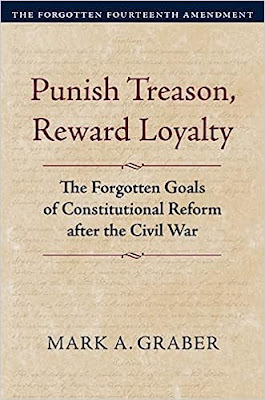
Mark A. Graber, Punish Treason, Reward Loyalty: The Forgotten Goals of Constitutional Reform after the Civil War (University of Kansas Press, 2023)
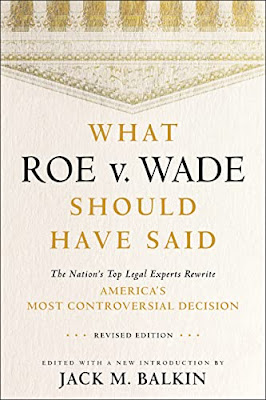
Jack M. Balkin, What Roe v. Wade Should Have Said: The Nation's Top Legal Experts Rewrite America's Most Controversial Decision - Revised Edition (NYU Press, 2023)

Andrew Koppelman, Burning Down the House: How Libertarian Philosophy Was Corrupted by Delusion and Greed (St. Martin’s Press, 2022)

Gerard N. Magliocca, Washington's Heir: The Life of Justice Bushrod Washington (Oxford University Press, 2022)
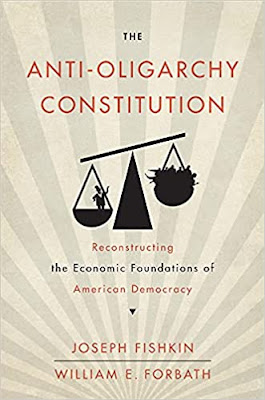
Joseph Fishkin and William E. Forbath, The Anti-Oligarchy Constitution: Reconstructing the Economic Foundations of American Democracy (Harvard University Press, 2022)
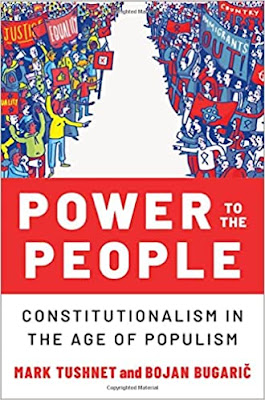
Mark Tushnet and Bojan Bugaric, Power to the People: Constitutionalism in the Age of Populism (Oxford University Press 2021).

Mark Philip Bradley and Mary L. Dudziak, eds., Making the Forever War: Marilyn B. Young on the Culture and Politics of American Militarism Culture and Politics in the Cold War and Beyond (University of Massachusetts Press, 2021).
Jack M. Balkin, What Obergefell v. Hodges Should Have Said: The Nation's Top Legal Experts Rewrite America's Same-Sex Marriage Decision (Yale University Press, 2020)
Frank Pasquale, New Laws of Robotics: Defending Human Expertise in the Age of AI (Belknap Press, 2020)
Jack M. Balkin, The Cycles of Constitutional Time (Oxford University Press, 2020)
Mark Tushnet, Taking Back the Constitution: Activist Judges and the Next Age of American Law (Yale University Press 2020).
Andrew Koppelman, Gay Rights vs. Religious Liberty?: The Unnecessary Conflict (Oxford University Press, 2020)
Ezekiel J Emanuel and Abbe R. Gluck, The Trillion Dollar Revolution: How the Affordable Care Act Transformed Politics, Law, and Health Care in America (PublicAffairs, 2020)
Linda C. McClain, Who's the Bigot?: Learning from Conflicts over Marriage and Civil Rights Law (Oxford University Press, 2020)
Sanford Levinson and Jack M. Balkin, Democracy and Dysfunction (University of Chicago Press, 2019)
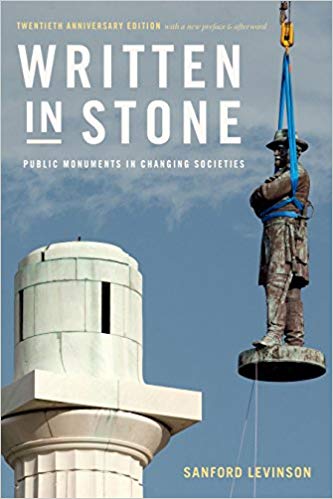
Sanford Levinson, Written in Stone: Public Monuments in Changing Societies (Duke University Press 2018)
Mark A. Graber, Sanford Levinson, and Mark Tushnet, eds., Constitutional Democracy in Crisis? (Oxford University Press 2018)
Gerard Magliocca, The Heart of the Constitution: How the Bill of Rights became the Bill of Rights (Oxford University Press, 2018)
Cynthia Levinson and Sanford Levinson, Fault Lines in the Constitution: The Framers, Their Fights, and the Flaws that Affect Us Today (Peachtree Publishers, 2017)
Brian Z. Tamanaha, A Realistic Theory of Law (Cambridge University Press 2017)
Sanford Levinson, Nullification and Secession in Modern Constitutional Thought (University Press of Kansas 2016)

Sanford Levinson, An Argument Open to All: Reading The Federalist in the 21st Century (Yale University Press 2015)

Stephen M. Griffin, Broken Trust: Dysfunctional Government and Constitutional Reform (University Press of Kansas, 2015)

Frank Pasquale, The Black Box Society: The Secret Algorithms That Control Money and Information (Harvard University Press, 2015)
Bruce Ackerman, We the People, Volume 3: The Civil Rights Revolution (Harvard University Press, 2014)
Balkinization Symposium on We the People, Volume 3: The Civil Rights Revolution

Joseph Fishkin, Bottlenecks: A New Theory of Equal Opportunity (Oxford University Press, 2014)
Mark A. Graber, A New Introduction to American Constitutionalism (Oxford University Press, 2013)

John Mikhail, Elements of Moral Cognition: Rawls' Linguistic Analogy and the Cognitive Science of Moral and Legal Judgment (Cambridge University Press, 2013)

Gerard N. Magliocca, American Founding Son: John Bingham and the Invention of the Fourteenth Amendment (New York University Press, 2013)
Stephen M. Griffin, Long Wars and the Constitution (Harvard University Press, 2013)
Andrew Koppelman, The Tough Luck Constitution and the Assault on Health Care Reform (Oxford University Press, 2013)
James E. Fleming and Linda C. McClain, Ordered Liberty: Rights, Responsibilities, and Virtues (Harvard University Press, 2013)
Balkinization Symposium on Ordered Liberty: Rights, Responsibilities, and Virtues

Andrew Koppelman, Defending American Religious Neutrality (Harvard University Press, 2013)
Brian Z. Tamanaha, Failing Law Schools (University of Chicago Press, 2012)
Sanford Levinson, Framed: America's 51 Constitutions and the Crisis of Governance (Oxford University Press, 2012)

Linda C. McClain and Joanna L. Grossman, Gender Equality: Dimensions of Women's Equal Citizenship (Cambridge University Press, 2012)

Mary Dudziak, War Time: An Idea, Its History, Its Consequences (Oxford University Press, 2012)

Jack M. Balkin, Living Originalism (Harvard University Press, 2011)

Jason Mazzone, Copyfraud and Other Abuses of Intellectual Property Law (Stanford University Press, 2011)
Richard W. Garnett and Andrew Koppelman, First Amendment Stories, (Foundation Press 2011)

Jack M. Balkin, Constitutional Redemption: Political Faith in an Unjust World (Harvard University Press, 2011)
Gerard Magliocca, The Tragedy of William Jennings Bryan: Constitutional Law and the Politics of Backlash (Yale University Press, 2011)
Bernard Harcourt, The Illusion of Free Markets: Punishment and the Myth of Natural Order (Harvard University Press, 2010)
Bruce Ackerman, The Decline and Fall of the American Republic (Harvard University Press, 2010)
Balkinization Symposium on The Decline and Fall of the American Republic
Ian Ayres. Carrots and Sticks: Unlock the Power of Incentives to Get Things Done (Bantam Books, 2010)
Mark Tushnet, Why the Constitution Matters (Yale University Press 2010)

Ian Ayres and Barry Nalebuff: Lifecycle Investing: A New, Safe, and Audacious Way to Improve the Performance of Your Retirement Portfolio (Basic Books, 2010)
.jpg)
Jack M. Balkin, The Laws of Change: I Ching and the Philosophy of Life (2d Edition, Sybil Creek Press 2009)

Brian Z. Tamanaha, Beyond the Formalist-Realist Divide: The Role of Politics in Judging (Princeton University Press 2009)
Andrew Koppelman and Tobias Barrington Wolff, A Right to Discriminate?: How the Case of Boy Scouts of America v. James Dale Warped the Law of Free Association (Yale University Press 2009)

Jack M. Balkin and Reva B. Siegel, The Constitution in 2020 (Oxford University Press 2009)

Heather K. Gerken, The Democracy Index: Why Our Election System Is Failing and How to Fix It (Princeton University Press 2009)
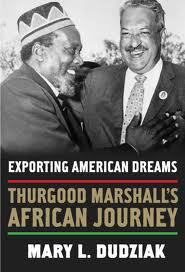
Mary Dudziak, Exporting American Dreams: Thurgood Marshall's African Journey (Oxford University Press 2008)
David Luban, Legal Ethics and Human Dignity (Cambridge Univ. Press 2007)

Ian Ayres, Super Crunchers: Why Thinking-By-Numbers is the New Way to be Smart (Bantam 2007)
Jack M. Balkin, James Grimmelmann, Eddan Katz, Nimrod Kozlovski, Shlomit Wagman and Tal Zarsky, eds., Cybercrime: Digital Cops in a Networked Environment (N.Y.U. Press 2007)

Jack M. Balkin and Beth Simone Noveck, The State of Play: Law, Games, and Virtual Worlds (N.Y.U. Press 2006)

Andrew Koppelman, Same Sex, Different States: When Same-Sex Marriages Cross State Lines (Yale University Press 2006)

Brian Tamanaha, Law as a Means to an End (Cambridge University Press 2006)

Sanford Levinson, Our Undemocratic Constitution (Oxford University Press 2006)

Mark Graber, Dred Scott and the Problem of Constitutional Evil (Cambridge University Press 2006)

Jack M. Balkin, ed., What Roe v. Wade Should Have Said (N.Y.U. Press 2005)

Sanford Levinson, ed., Torture: A Collection (Oxford University Press 2004)
Balkin.com homepage
Bibliography
Conlaw.net
Cultural Software
Writings
Opeds
The Information Society Project
BrownvBoard.com
Useful Links
Syllabi and Exams
